


Jaw Orthognathic Surgery


What is Jaw Orthognathic Surgery?
Jaw surgery to correct long and short jaws is one of the basic tenets of Oral & Maxillofacial Surgery. Oral & Maxillofacial surgeons are extremely well trained in this area. The success of such surgeries not only requires proper planning of the actual bone surgery itself but also a very good knowledge of dental occlusion.
Treatment Plan
Understanding the orthodontist’s (braces specialist’s) treatment plan is crucial, so that there can be meaningful discussions and co-planning to ensure an optimum outcome for the patient.
Other disciplines, like Plastic Surgery, do not have this advantage, as the training is not anchored in dentistry. The sequence of treatment includes proper consultations with both the oral & maxillofacial surgeon and orthodontist before a tentative plan is proposed. The patient’s concerns are carefully noted and the plans are directed towards addressing these concerns.

Why jaw surgery?
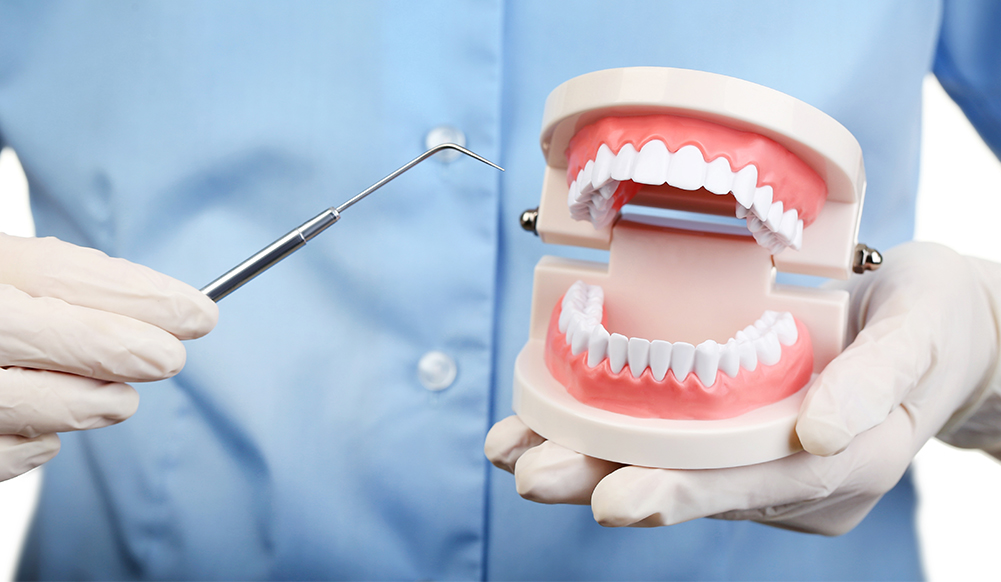
Most jaw surgeries are indicated when the orthodontist (braces doctor) finds that the teeth cannot be moved to meet despite the best efforts. This can be due to a larger-than-usual difference in the distance between the upper and lower jaw arches. There are also cases when the upper or lower jaw arches develop in an asymmetric manner. These are indications for jaw (bone) surgery.
Standard Protocol
The standard protocol involves a proper assessment of the patient by both the orthodontist and the oral & maxillofacial surgeon. A tentative orthodontic and surgical plan is worked out and presented to the patient and family. Such treatment generally begins with braces for about nine months to a year. At this point, the patient will be ‘ready’ for surgery. The surgery is then carried out and the braces treatment continued for another year. In total, such treatments will last for about two to two and a half years.
The Aftercare
Surgeries are different in every case, but they generally involve a five-day hospitalization stay followed by three to six weeks of medical leave. At the end of treatment, both orthodontist and oral & maxillofacial surgeons will follow up with patients for up to five years to ensure good healing and long-term stability of the surgery outcome.

Your Trusted Partner in Dental Excellence.
Your journey to a dream smile starts here. Experience personalized, comfortable care from the moment you walk through our doors, tailored specifically to your unique needs.
FAQs
Do I need jaw surgery?
Most patients who come to see us for jaw surgery consultation feel that their jaws are either too long or too short. We make our treatment plan according to the patient’s objective. Not all cases have to undergo jaw surgery to achieve their objective. Discuss this in detail with your surgeon.
What do I do if I wish to have jaw surgery?
Patients who wish to have a consultation can get a referral through their own dentist. They can be referred to either an orthodontist (braces specialist) or an Oral Maxillofacial Surgeon (jaw surgeon). You can also make an appointment directly to see the above specialists.
What does the treatment involve?
The treatment conventionally begins with consultations with both the orthodontist and the Oral Maxillofacial Surgeon to discuss the treatment objectives and then the treatment plan. X-rays of the jaw, photographs of the jaw and face, as well as moulds, will be taken to assess your case further.
If treatment is to proceed, it usually starts with braces treatment for six to nine months, followed by the surgery. After the patient recovers from the surgery, the braces treatment will continue for six to nine months.
What does the surgery involve?
The surgery may involve one or both jaws. The upper and lower jaw bones are re-aligned and fixed with bone plates in the new positions. These plates are made of Titanium and usually need not be removed. There is a short period of two weeks where the patient’s jaws will be loosely fixed together to allow the bone to heal. Patients will have to be on a liquid diet for the two weeks after the surgery.
Are there common consequences for this type of surgery?
For the upper jaw, there is a chance of ‘numbness’ at the mid-cheek region as the surgery is carried out very near a cheek nerve. This usually recovers. For the lower jaw, there is a 30% (average) risk of permanent numbness to the lower lips and chin. The degree of numbness varies and cannot be predicted. There is also a risk of numbness to the tongue, but this is usually one-sided if it occurs.
Will there be any scars on my face?
The surgeries are carried out through the oral cavity and all cuts are made in the gums. There are no external incisions. This is also the reason that the patient’s lips will be very swollen after the surgery, but this will recover with no permanent changes. The patient’s face will also be very swollen for the first two weeks.
This surgery sounds very painful.
As this is not a small surgery, we will expect pain in the jaws and the mouth. Intravenous painkillers will be given while the patient is warded. Oral painkillers will be issued upon discharge. Pain is part and parcel of any surgery. Different patients have different thresholds for pain. As doctors, we try to mitigate the pain as best we can.
How many days am I expected to stay in the hospital?
In most cases, we admit our patients the day before the surgery. On the day of the surgery, the patients will be sent to the “High Dependency” ward (a sort of stepped-down Intensive Care Unit) as a precaution. Most patients will leave HD on the third day and return to the general ward. The total number of days of stay ranges from four days to one week.